Every year a seemingly random artist releases a monster album in the underground country scene. In the past 10 years, the first album that comes to mind is Jason Isbell's 2013 classic Southeastern. A close second to Southeastern is definitely Cody Jink's 2015 masterpiece Adobe Sessions. Jinks would double down on such an honor with 2016's I'm Not the Devil. Country music has its list of independent mainstays--some follow a non-traditional multi-genre sound like Isbell, and then there are stubbornly traditional artists like Jinks. In 2018, the best album released under the Country umbrella goes to an artist more in the vein of Jason Isbell. Ruston Kelly's Dying Star is an introspective masterpiece.
There's a bit of context to establish here--not everybody knows that Ruston Kelly is Kacey Musgraves' husband. He's one half of a very talented musical household. Kacey Musgraves made quick, easy work of the 2018 Grammy awards with her own excellent album in Golden Hour. I reviewed that record and, while I don't personally like it as much as some critics, its expansive reach was obvious and the success it brought to Kacey Musgraves wasn't in any way surprising. And most importantly, it was well-deserved, which just isn't the case with every Grammy winner. Readers can fill in the blanks for themselves, there.
Dying Star is dark yet hopeful, moody but controlled, not too short and not too long. "Blackout" is one of the two best songs on the album, and perhaps the darkest of the bunch. It speaks to how a failed relationship can spark substance abuse without making some sort of moral statement. In a refreshing way, "Blackout" also doesn't condone that kind of behavior.
The other standout has to be a fan favorite entitled "Mockingbird." Kelly has been playing this song for several years now. Everything is perfect, from the emotions conveyed by the harmonica in the intro and bridge, to the cleverly written lyrics throughout. For guitar nuts like myself, there's a well-written finger-picking lick played in the intro and at different parts throughout the song. As far as I'm concerned, this song has everything.
"Mockingbird" is definitely my favorite tune from Dying Star, and I don't think I can find any more words to do it any real justice.
The remaining songs on the album don't necessarily come up short of "Blackout" and "Mockingbird." Those two just happened to be the songs that most connected with me as an individual listener. A very close third is "Jericho," which might have the cleverest chorus on Dying Star, even if "Blackout" carries more punch. If I had to name 3 essential songs from this album, those 3 would be it, no doubt about it.
Kacey Musgraves provides backing vocals on several songs, most notably "Just For the Record." Unsurprisingly, her voice blends very nicely with Kelly's. Musgraves and Kelly are very dynamic on the same stage--live videos on YouTube showcase as much. I almost feel unfortunate for the fact that I knew it was coming. I think listeners unfamiliar with Kelly and his marriage to Kacey Musgraves will find it to be a nice surprise.
The sound of the album is what most strikes me aside from the lyrics. One song can be a traditional sounding country standard with steel guitar. The next sounds like a classic Ryan Adams-esque Americana song. Despite those sonic differences, Dying Star has a very nice, cohesive structure.
The praise I could heap on this record is endless. I feel blessed to have heard it. Do yourselves a favor and listen to it.
An early winter sunset. I think this was in either November or December. Every North Dakota sunset is unique and worthwhile. If you're outside and you aren't finding yourself a view, you're missing out.
This Bull Moose was sunning in a field east of Donaldson, Minnesota. We came upon this guy on our way to look at a truck West of Greenbush. We called some friends who were heading up that way for different reasons and they got to see him, too. Nature only allows a handful of sightings a year. We have to appreciate them when they happen.
This was the west overhead door at my workplace after the biggest snowfall total of the year. This drift went out a good 50-100 feet from the building. We had to wait for snow removal to even try to clear the door. Backs were aching, swear words were said. It's been a tough winter.
Here's a midwinter sunset. As you can see, I have a world class view from my family farm. Those three pines on the right always add a little extra character to my pictures.
Calving season is upon us. This little guy wanted up out of the snow and manure. Thankfully we saw him before we re-filled the feeder. Small calves love to lay in feeders--you can't be too lazy to check or you'll kill a young animal and hurt your pocketbook come time to sell.
Dolly is a very friendly dog, but she's very strange. She rarely lets anyone pet her unless she's inside or she knows she can get away. She doesn't like to be put on a cable--that's for sure. Here I am, scratching her ears, which she is only allowing because there's a cattle gate between us.
A recent sunset. Gone are the dulled colors of frigid winter. I think we've finally turned the corner (knock on wood).
What can I say? It's been a long time, which is compounded by the fact that my last 3-5 posts/reviews have had such large gaps between them. Life happens, I guess, but that's just an excuse. Now and in any other context that it's used. Life happens.
The purpose is much the same now as it was at this blog's origin. I'm here to write about things I'm passionate about while also hoping that it jump-starts my short fiction writing. It worked the first time, so why not try it again?
I'm going to attempt to incorporate other aspects of my life into The Hayloft, not just music reviews. Be on the lookout for pictures from life in Rural America, work in the agriculture industry, beautiful places in northeast North Dakota, and opinion pieces. Sometimes all a person needs to quiet their mind is a place for their thoughts. I'm going to give it a try. Also, I will be reviewing albums from any format and from any time period. There will still be some new releases, of course. If I feel passionately about an album, I want to review it, and so I will.
Thanks to everybody who has read and will happily continue to read, as well as any others who will begin to read as I try to get this thing going again. Your support and interest means a great deal to me. I'll be the first to admit that the review format is more rigid than I like to work with, but there are a handful of my reviews that I am truly proud of (American Band by Drive-By Truckers, I'm Not the Devil by Cody Jinks, and Fighter by David Nail, if any of you are interested in looking at my better pieces). I'll improve over time, and I need to start again somewhere.
On to the review: Wade Bowen's Self-Titled Album
Wade Bowen is a generational songwriter, as far as I'm concerned. Luckily for us fans, we've been allowed to witness his growth in the art form. From his early days in college to the prime of his career, which I can happily say he is still in, especially after the release of his most recent album, Solid Ground. The great road block in my review process happens to be Solid Ground. I cannot find sufficient words, and every time I attempt to write the review, I fail to do the album justice.
So here I am, retreating to Bowen's prior album, which is also fantastic. "When I Woke Up Today" opens the album on an upbeat note, and was also the lead single. It's a grower. I wasn't a huge fan right away, but over time it became one of my favorite Wade Bowen tunes. Lyrically, the song discusses the balance of highs and lows that life presents to all of us. The narrator maintains a glass half-full perspective while acknowledging hardship. "When I Woke Up Today" is dark despite its sunny arrangement, and yet light at times to counter that darkness. Much like life itself.
"Sun Shines on a Dreamer" acts as justification for the continuous effort of chasing one's dream. It's airy and cheerful and so strange to hear from Wade Bowen. Nevertheless, it's a great song, and one I'd certainly want to hear live. At track three is "My California," the first classic Bowen ballad on the album. This song, paired with "Hungover" at track 5, perfectly represent what Wade Bowen has always excelled at. Clever lyricism and grade-A hooks in each chorus. You can't go wrong with either song.
"Watch Her Drive" is an interesting left turn at six and a half minutes. Bowen continued this tangent on Solid Ground with more long songs, and he and his band are really quite good at it. "Watch Her Drive" is never boring and doesn't seem as long as it is.
5 songs in and I'm absolutely hooked. Just like 2014 when it came out, there's no stopping once the record is playing.
"West Texas Rain" is another standout and seems to have become a fan favorite in a live setting. "When It's Reckless" follows and is another upbeat song with a great chorus. Listeners will be replaying this one--it's easily one of my favorite upbeat songs from Bowen's catalog. At track 8 we find the album's best song. "Long Enough to Be a Memory" covers a lot of ground, from the initial move from one's hometown to the place where they'll begin to chase their dream, to the eventual road-life of all touring musicians. In each case, the narrator is a "stranger in a strange town," and yet, he concludes that each place is similar enough to "give me all I need." Bowen finishes each chorus with "and I just hope I stay long enough to be a memory." The song discusses how, even in the process of change, the cyclical nature of life always resurfaces. It's a truly great song.
Unfortunately, that's where the album hits its peak. There's nothing wrong with the four remaining songs--they just aren't nearly as good as "Long Enough to Be a Memory." Many artists strictly follow the album format that places the strongest song either at the end of the album or near the end. It's hard for listeners to stay interested when they have four more songs to listen to after an album's best song. Nevertheless, this is my only criticism for this album. The last four songs are still good, but by default they're forgettable.
I'd give Wade Bowen's self-titled album a solid 7/10. The follow up record, Solid Ground, is better, and hopefully I can find the proper words for it at some point.
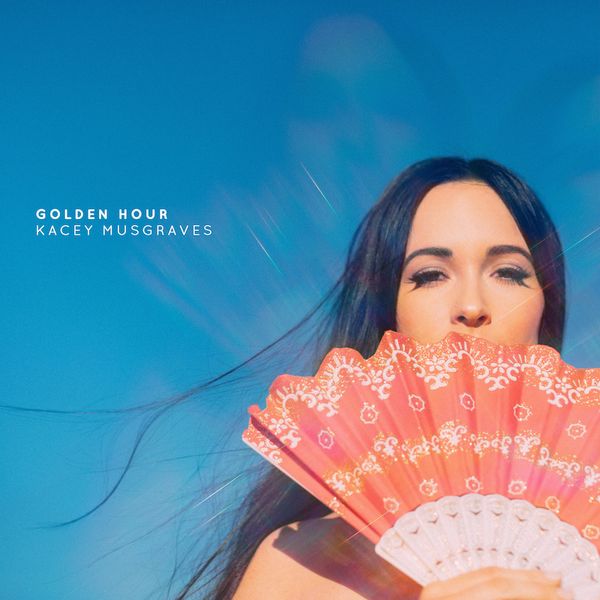
Stop me if you've heard this before: a musician with a true gift for storytelling and songwriting excels in the Country genre, but some time passes and all of a sudden Rolling Stone Country and other mainstream country music outlets are quoting said artist claiming that his or her next album won't focus on genre and that Country music can be somewhat one-dimensional and limiting.
Sadly, that's the gist of what we heard from such outlets and from Kacey Musgraves herself as we patiently waited for the release of her new album. Golden Hour hit the shelves on the last Friday of March, and since that time it's been a struggle to find the truth hidden among all the political and anti-Country Music reviews from major media outlets proclaiming that Golden Hour is some transcendent album that'll stand the test of time. The general consensus of major media is that this is, indeed, the golden hour of Kacey Musgraves.
It isn't. That being said, it most certainly is a very good pop album with some minor country elements save for "Space Cowboy," which might be the truest country song that Musgraves has ever released, and I would argue it's her best song to date, as well. It also serves as something of a turning point in the middle of Golden Hour, because the general quality of the songs takes a horrible nosedive afterward. "Happy & Sad" and "Wonder Woman" are very good songs, but "Velvet Elvis," "High Horse," and the title track would have been best left off the album, because they're arguably the worst three songs that Musgraves has ever released. They also happen to represent the furthest that Musgraves traveled outside of the country genre on Golden Hour. Gee, that was predictable. Thankfully, final track "Rainbow" is a longtime fan favorite from Musgraves' live performances. Emotionally challenging, "Rainbow" is probably every bit as good as "Space Cowboy," and other writers have called it the best song on the album.
But that first half of Golden Hour? Country, pop, or whatever, each song is well-written, catchy, spacey, and most importantly, flat out excellent. Opening track "Slow Burn" put my worries to rest by the first chorus. "Mother" is already over after a minute and eighteen seconds, but by god if it doesn't hit home with its message and meaning. "Lonely Weekend" calls to mind the dreamy, airy pop of the 90's and I would even say that it reminded me of the softer alternative rock that was released in those years, even if it lacked that kind of instrumental arrangement.
"Oh, What a World" probably ventures a little too far production-wise for my tastes, but its lyrics are clever and the delivery excellent. Classic Kacey from a lyrical perspective, to say the least. "Love is a Wild Thing" offers an upbeat, easy-listening reprieve just before "Space Cowboy" reminds listeners of past relationships that lacked commitment from their partners.
At this point, it's necessary to address the elephant in the room--"High Horse." Disco-infused pop with a clumsy melody that trips over itself repeatedly. The song is said to be an effort to blend Bee Gees era disco with modern pop and country, and it doesn't work all that well. Imagine that. Lyrically, the song seems a jab at exactly the kind of listeners who would dislike the song itself--country purists. There's this narrative pushed by corporate Nashville that says that anything and everything could be considered country music and that those of us who live in reality and understand that square pegs don't fit in round holes are just snobs standing on high, looking down on the atrocities on the radio. Kacey Musgraves is not an artist who receives significant radio play (that in itself is an atrocity--she's so much better than what's on the radio), so I don't understand why she felt the need to push such a message, even if she feels that way. I highly doubt Kacey Musgraves is a fan of the kinds of songs we repeatedly lambaste and take issue with, so it seems odd for her to release "High Horse" in the first place. Hopefully it's a one time thing.
In the end, Golden Hour is a collection of songs that vary in quality. Some are excellent, some good, some decent but forgettable, and finally, like most albums, it has its fair share of duds. It is exceptional compared to most, but it is not the tour de force that certain outlets would lead you to believe. Their perspectives are more rooted in her political leanings (which is strange, because Golden Hour is Musgraves' least political album yet) and their general dislike for country music than in anything related to the music itself. That being said, Kacey Musgraves is a songwriter of such high quality that I truly hope she eventually finds her niche on radio, but until she does, it's up to us fans who want more from music to purchase her albums, buy her concert tickets, and tell as many people as possible about her wonderful talent. 7/10 and highly recommended.
Lost in all the hype about the new Kacey Musgraves album from last Friday was the release of a significantly better album by relative newcomer Ashley McBryde. Girl Going Nowhere has been eagerly anticipated by country music fans since Eric Church brought her on stage during a recent tour to play her wonderful song "Bible and a .44." Honestly, perhaps the greatest disappointment I have with Girl Going Nowhere is that "Bible and a .44" isn't on the track list. At first I thought this was a huge mistake, only to find out it was released on a prior album.
The album begins with the title track, which details the beginning of McBryde's journey where she was doubted by people in her life. It might be a familiar theme, but one thing most great art has in common is the ability to put a personal twist on everyday, relatable stories. McBryde accomplishes just that with "Girl Going Nowhere" and it's a great way to start the album.
What follows is a group of good to great songs with the lone exception of "Southern Babylon," which is strange and awkward and interrupts the cohesion of the album as a whole. Thankfully, it's the album's only misstep. Songs like lead single "A Little Dive Bar in Dahlonega" showcase once again McBryde's ability to take everyday narratives and give them the personal twist needed to make them all her own.
Hands down my favorite song on Girl Going Nowhere is "Livin' Next to Leroy." Meth is an epidemic in the Midwest as well as other parts of the United States, and to hear a song approach the topic on a mainstream country album is very moving, and I hope that it reaches the right ears so it can inspire addicts to seek help and give the rest of us the swift kick in the ass we need. Perhaps the best part of "Livin' Next to Leroy" is its implied message--at this point we can't ignore the problem anymore, and something needs to change.
"Andy (I Can't Live Without You)" is another standout. If this song can't make a listener think of someone who can frustrate them one moment, then light them on fire internally the next, nothing will. It's a very emotional testament to the trials and tribulations of everyday life with a partner, only to remind us of things that really matter during the chorus.
One more favorite is "El Dorado." At first I was hoping it was a cover of the song written and performed by Randy Rogers and Wade Bowen on Hold My Beer, Volume I. Instead, though, McBryde unleashes an uptempo song that is wonderfully catchy. The placement of the song was excellent, too, as it provided a needed break after hearing "Livin' Next to Leroy" and "Andy (I Can't Live Without You)" as two of the three prior songs.
Overall, Girl Going Nowhereis an excellent mainstream debut for Ashley McBryde. It's already rare to find an album with only one bad song, but for McBryde to pull it off with her first release that'll reach a national audience? To say the very least, that's impressive. Highly recommended. 8/10
Drive-By Truckers are an iconic fixture in the alternative country scene, with many years of touring and studio album releases under their collective belt. They've made a career of breaking ground, developing their own unique sound and recording albums with odd little inclusions rarely heard in modern music. Perhaps the most obvious of these traits is that the band doesn't have a lead vocalist. Longtime stalwarts Patterson Hood and Mike Cooley take lead vocals based on whoever wrote the song in question, as did the incredible Jason Isbell when he was a member of the band.
When one considers all of the ways in which Drive-By Truckers differ from other artists, it's hard to fathom how they've now released perhaps the most important album of their career, American Band, by treading well-worn lyrical paths. American Band is ripe with social commentary, a lyrical masterpiece in that Hood and Cooley veer away from any kind of protest agenda and instead tell needed stories that neither preach nor perpetuate any specific political statement. The main theme of the record seems to be that certain things in our society are wrong and in need of fixing. That might be obvious to any aware citizen, but the songs on this album speak for themselves.
Gun violence is a recurring theme on American Band, but Hood and Cooley focus more on the individuals that do such things as opposed to their weapon of choice. Despite what their stances may be on potential legislation, these two songwriters still have the necessary understanding that people are the primary issue. It's a refreshing perspective in this day and age where everybody shares their two cents regardless of how educated they are on the topic. Standout track "Guns of Umpqua" (Umpqua Community College in Roseburg, OR, was the site of a shooting in 2015) has some of the best lyrics that I have ever heard. "We're all standing in the shadows of our noblest intentions of something more/Than being shot in a classroom in Oregon," sings Hood, just one of many fantastic lines in the song. With "Guns of Umpqua," Hood flashes back and forth between wholesome memories of a life well lived and a narrative of the present depicting the narrator and others trying to barricade their classroom door as they hear a shooter in the hallway. I see it as Hood's way of addressing the sad reality that it's hard to feel safe at any time.
"Ramon Casiano" sits at track one and is Mike Cooley's way of setting the mood for American Band. Casiano was a young Hispanic killed by eventual NRA leader Harlon Carter in 1931, a case that largely resembles modern "stand your ground" cases, as Carter claimed that Casiano threatened him with a knife. He was initially convicted of murder but the conviction was eventually overturned. Thankfully, the song is about the two people in question and not the weapon of choice. It's very apparent that Drive-By Truckers meant for American Band to focus on the main problem in American society--the people themselves.
"What it Means" is the lead single, and Hood uses damn near six and a half minutes to detail both the progress we've made and the problems that we unfortunately still have. "I mean, Barack Obama won/and you can choose where to eat/but you don't see too many white kids lying bleeding on the street," Hood sings, begging us to stop pretending that progress means that all of our problems are gone. Perhaps the most important line of the song is when Hood sings, "And when they turned him over/they were surprised there was no gun/I mean, he must have done something/or else why would he have run?/and they'll spin it for the anchors on the television screen/so we can shrug and let it happen without asking what it means."
"Once They Banned Imagine" is one more standout on an album full of great songs. Mike Cooley discusses the culling of artistic expression in our society and how that plays a role in the issues that continue to plague our nation. I would assume that the song also has something to do with the longtime controversy surrounding John Lennon's "Imagine." Lyrically, "Once They Banned Imagine" isn't as clear as I'd like it to be, but then again the best songs leave something to be deciphered. It's one more great song written by Mike Cooley.
American Band is an album with a dangerous concept in the hands of lesser songwriters, but because Patterson Hood and Mike Cooley are capable of addressing such topics without grandstanding on their own perspectives, it's a miraculous achievement that hopefully reaches as many ears as possible. While those hyper-sensitive to these issues might cast American Band as leftist propaganda, that'll only go to show that they didn't truly listen to the music and lyrics. American Band is an album about people problems, and that's what sets it apart from past albums with similar themes. Buy this album. Listen to it. Love it. It's probably the most important album of the year, and certainly one of 2016's best releases. 9/10
Welcome to 2017, folks, a year in which men are supposed to be a little more aware of the ways in which they objectify women, and should perhaps understand just how demeaning it is to speak in certain ways to a woman. If you'd like to know how realistic that idea was, Sam Hunt's truly horrifying "Body Like a Back Road" has become a number 1 song with no real indication that it'll be slowing down any time soon.
If you listen to mainstream country, I'm going to assume that you've heard "Body Like a Back Road" by now, but here are the basics. Guy likes girl. Guy makes truly ridiculous comparisons between girl's body and objects or places. "Hips like honey" and other cringe-worthy lines that'd kill the mood instantly in most intimate scenarios.
It's not that each individual line is the worst we've ever heard from mainstream country, not even in the last 5 years. It's what this song represents in today's day and age. We like to think we're making progress in the way we treat women, but when some dude who looks like he just stepped off the modeling runway sings a song like this to massive acclaim and gets away with it, it's hard to believe we've made any progress at all. And that's what really drives this message into the ground, for me. If a normal looking dude had written and recorded this song, it wouldn't be surprising if there was a massive media firestorm condemning him and effectively ending his career. If a normal looking dude making country music were to come out and criticize this song for calling it what it is, the media would likely scoff and make allusions to the probability that he's just bitter about being rejected at some point in his life.
It's the things we allow to happen for unjustifiable reasons that sabotage any progress that might be made in our efforts to raise young men who respect women.
Sam Hunt gets away with this because he's not a normal dude. He's a traditionally good looking former athlete with some real songwriting chops (though you'd never know it by listening to this song), a pleasant voice (for the most part--he gets a little breathy, at times, but he's not the first to deal with this issue), and, despite this song, genuinely appears to be a decent human being. I don't personally dislike Sam Hunt, and I don't even hate all of his songs, though I wish they were being played on pop radio where they belong. "Make You Miss Me" is exceptionally catchy and very tangible to any person who's ever turned the other cheek on somebody who ditched them. "Take Your Time" is slightly awkward with its monologue verses, but the chorus is impeccably catchy and the instrumental arrangement is haunting. Sam Hunt is not a strictly bad artist by any means. He's just being played in the wrong format, and now he's unknowingly written and released a song that represents every way in which we don't want to treat women in today's world.
I don't honestly think Hunt realized what "Body Like a Back Road" symbolized when he and his co-writers wrote it. I think this is ignorance in full force. That's the unfortunate point, though. We still don't know what we do wrong. We still don't know how not to speak to women, how not to speak about them. One could argue that "locker room talk" is a reality of the world for both men and women, and maybe it is, but it should stay in private circles, and when it does leak out into our art, we should understand what is wrong with it and, you know, maybe not celebrate it like we're a bunch of dimwitted morons.
There are so many factors in play that caused the success of this monstrosity. Ignorance. Tolerating such ignorance for stupid reasons like a person's appearance. The lack of focus on the arts in schools (teach kids what good art is and they'll be able to identify drivel like this and let it die quickly like it should have). There's really no redemption to be had for "Body Like a Back Road." It's the "Blurred Lines" of country music, even if music fans aren't smart enough to realize it isn't a country song. Please, people, learn from this horrid mistake. Think about it this way. Would I want to be spoken to like this? Would I want any of my loved ones to be spoken to like this? Would I want my daughter to be spoken to like this? Would I want my son to speak to a woman like this?
Those answers were all no, weren't they?